Folklore and Christian Art Museum of Andros

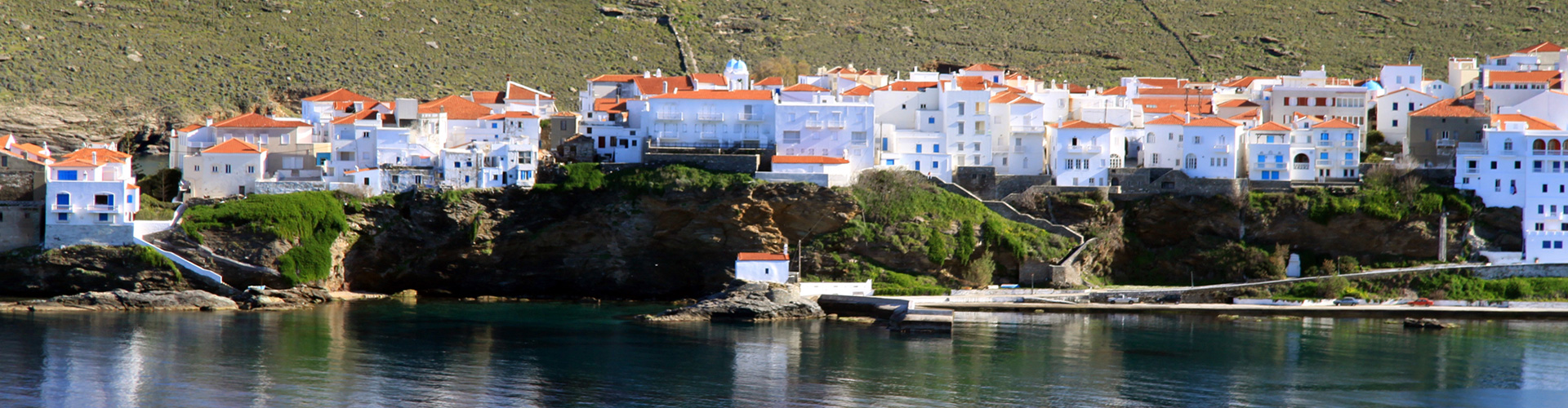
At the entrance of the town of Andros you can find the old ice factory of Mantzavelakis, while the Folklore and Christian Art Museum is housed in the restored areas of the town. At the basement you can see a typical house of Andros (with a cellar), as well as traditional products and professions of Andros. On the upper floor, which used to function as an olive press, there is the Christian exhibition of Andros with items dating back to the 18th-19th centuries. The exhibition is divided into three parts:

English

Saint Peter Tower

The Tower of St. Peter of the Hellenic era (4th – 3rd century B.C.) is one of the best preserved towers of Cyclades. It is a cylindrical building, 20 meters in height, and the diameter of the base is 9.40 meters. It is entirely constructed of local slate. There is an interior staircase that leads to at least five floors.

The tower is built on a very privileged position as it dominates the valley of Gavrio and overlooks the sea and the ships. Also, around the tower, you can find the ancient copper mines which were still in operation until the beginning of the century.

English

The Monastery of Panagia Panahrantou

This Byzantine monastery is located in “Katafigio”, on the north slope of mountain Gerakones at an altitude of 230 meters with a spectacular view to the villages of central Andros in the Mesaria valley till the sea. The monastery was built by the Byzantine emperor Nikiforos Fokas in 963 – 969 A.D. The Catholic part of the monastery consists of a cruciform temple with a dome and is dedicated to the assumption of Virgin Mary.

English

The Monastery of Zoodochos Pigi

The Monastery of Zoodochos Pigi, or The Monastery of the Saint as the people of Andros call it, is the biggest monastery of the island. Its exact construction date is unknown. The first written reference to it is documented in 1400 while in the church there is a drawing dating back to 1325. The renovations that took place in the 16th and 20th centuries altered the Byzantine character of the monastery. The Katholikon of the monastery has a carved wooden iconostasis and paintings dating back to the post-Byzantine period.

English

Pigeon Houses of Andros

Pigeon Houses are said to be “the most lyrical and complex compositions” in Greek folk architecture. You can find them almost everywhere on the island, mainly in the area of Korthi.

They are two-storey, squared buildings. The nests of the pigeons are on the upper floor whereas the basement is used as a storage room. The houses are decorated with geometrical shapes such as triangles, squares, rhombuses, circles etc. The final result resembles “embroidery on white canvas” attributing, thus, a transcendent character to the whitewashed building.

English

Castle of Faneromeni

Castle of Faneromeni or Pano Kastro or The Castle of the Old Lady was the biggest medieval town of Andros (with signs of Roman fortification). It was built by the Venetians to offer protection from the pirates. It is located North of Gialos (Korthi Bay) at approximately 600 meters of altitude. In the castle one can still find the remains of houses, aqueducts and barricades. The mountains in the area are steep and their tops look as if they are “cut” with rocks popping up here and there.

English

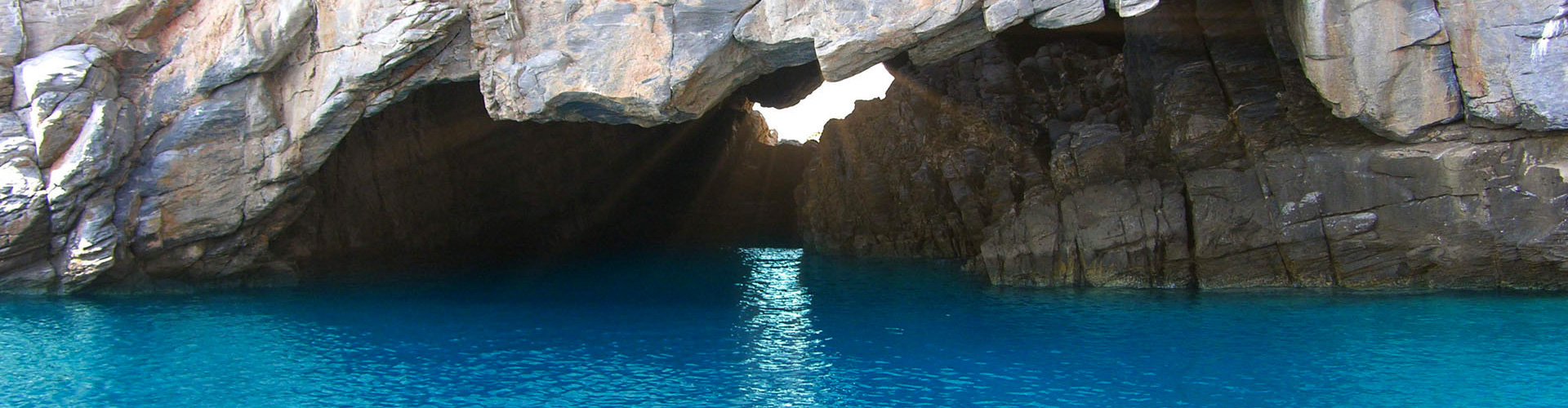
Cave Foros

Cave “Foros” is located in Aladino village and is 4 km far from Hora. It occupies approximately 500 sq.m. and it is one of the first discovered caves of Greece. You can start your exploration of the area at the old bridge which was constructed in 1680 AD from Epirotis master builder Kitsos Zois and his guild. A traditional cobbled road leads to the cave. It starts from Aladino Bridge where you can see the “big river” with all the ducks, turtles and eels, and after hiking for 300 meters you will see the cave between the oak trees and wild pear trees.

English

Afanis Nautis (Unknown Sailor)

At Rivas square, at the lower part of Hora, you will find the statue of the Unknown Sailor (Afanis Nautis) in honor of all the sailors who have lost their lives in the sea. It is the work of Mihail Tombros; a donation of Goulandris family. It was placed on its pedestal on November 5, 1959 and stayed there till April 30, 2001 when a strong wind dropped it on the ground. After its reparation, it was put back in place where it remains till today. It is a legendary statue, an attraction for visitors, a trademark, something to stare at and take pictures of.

English

Pigi Sariza (Sariza Fountain)

Legend has it that Pasha San Rizas who lived on the island of Evoia lost his tarboosh inside a creek till it finally got washed up inside a fountain at Apoikia village in Andros. The fountain, therefore, was named after him and they say that Sariza Fountain is connected to Evoia. Even though the exact restoration date of the fountain remains unknown, we know that it was constructed in 1787 and was funded and supervised by Makarios Polemis. The fountain was mainly used as a water supply for the inhabitants of the village and as an irrigation system for the fields.

English

Fellos

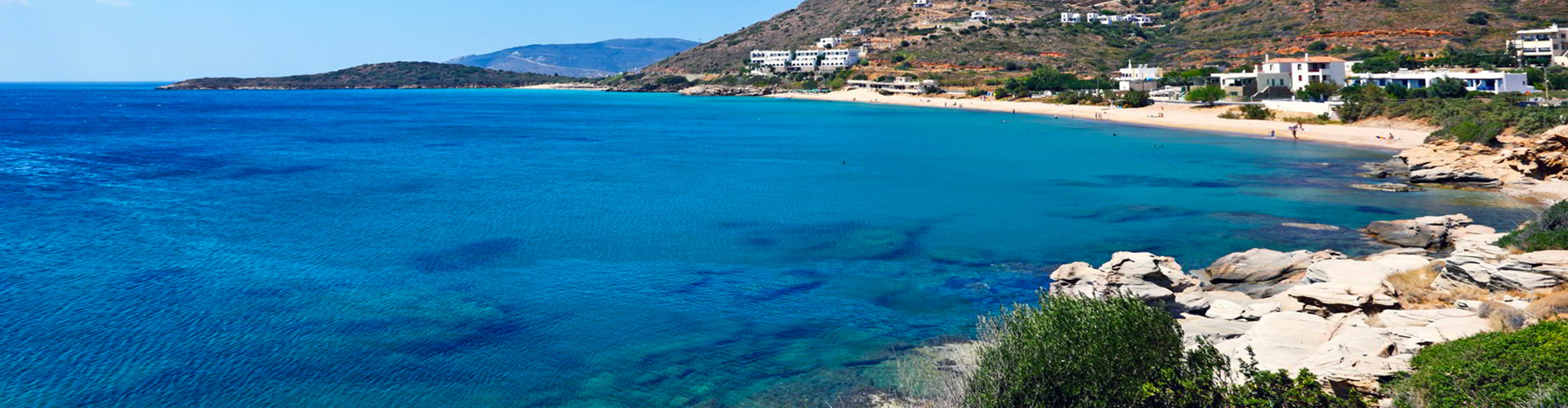
This is a sandy beach, shaded by trees. There are taverns within walking distance and the place is ideal for fishing enthusiasts. It is located in the northwest coast of the island, only 4.5 km. north of Gavrio. Keep in mind that there is often wind blowing from the South.

English

Pages

Subscribe to travelfind.gr RSS